
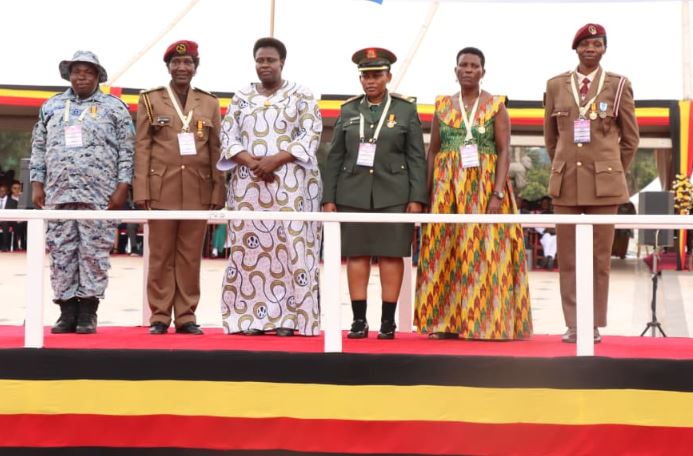
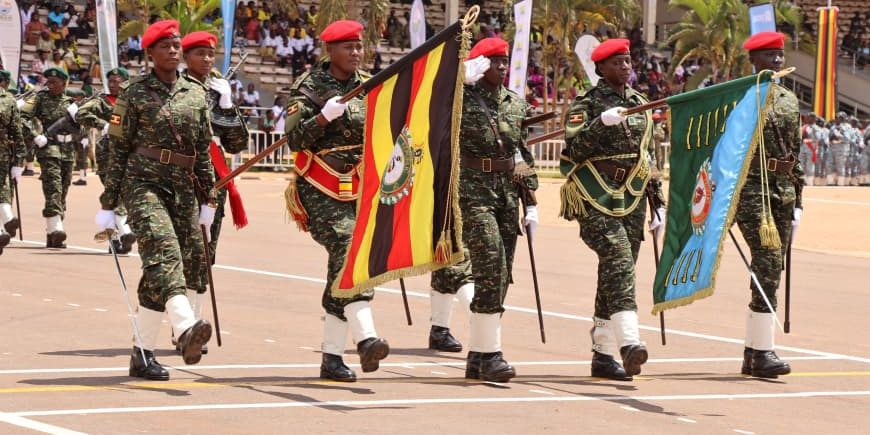
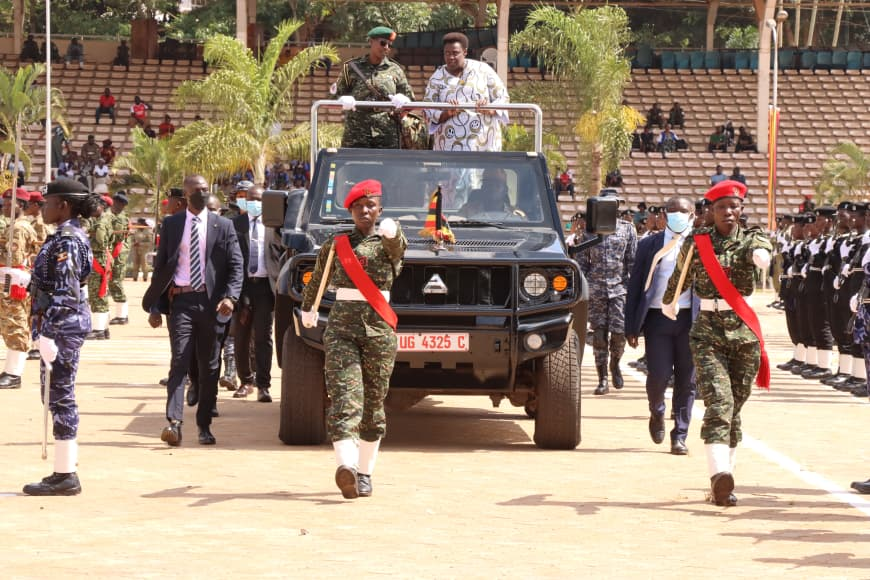
Uganda Peoples’ Defence Forces (UPDF) joined the rest of the country to commemorate International Women’s Day during national celebrations held at the Kololo Ceremonial Grounds in Kampala.
The event was held under the theme, “Scaling Up Investment to Accelerate Access to Justice for All Women and Girls in Uganda.”

His Excellency, President Yoweri Kaguta Museveni’s message was delivered by the Vice President, Her Excellency Maj. (Rtd.) Jessica Alupo, who highlighted the government’s efforts since 1986 to address barriers that historically limited women’s access to education and economic opportunities.
“At that time, women constituted more than half of the population but faced significant obstacles, especially in education and economic participation. Government policies have since focused on removing those barriers,” the President’s message read.
The message added that International Women’s Day provides an opportunity to recognise the important role women play in families, communities, and national development.
“Today we celebrate the contribution of women and girls to our country. Their efforts in families, communities, and institutions continue to shape Uganda’s progress.”
According to the President’s message, this year’s theme reflects the government’s commitment to strengthening systems that protect the rights of women and girls and ensure equal access to justice and opportunities.

The President’s message highlighted key government initiatives such as Universal Primary Education (UPE) and Universal Secondary Education (USE), which have expanded access to education for millions of children, particularly girls.
“Education remains one of the most powerful tools of empowerment. Once people are educated, they are able to participate meaningfully in decision-making and economic activities.”
The President further noted that affirmative action policies have enabled more women to access higher education and leadership positions.
“Through deliberate policies such as additional entry points for female students in universities and reserved leadership positions, more women have taken up roles in governance and public service. These initiatives have demonstrated that women are capable leaders and effective managers.”
The President reaffirmed the government’s commitment to eliminating harmful cultural practices that undermine the dignity and rights of women and girls.
“Government continues to take firm action against practices such as female genital mutilation and other forms of discrimination that violate the rights of women,” the message read.
The message emphasised that advancing women’s empowerment requires collective action from government, communities, and development partners.
“The empowerment of women cannot be achieved by the government alone. It requires the participation of communities, institutions, and development partners to create opportunities and strengthen justice systems,” the message added.

The Minister of Gender, Labour and Social Development, Hon. Betty Amongi Ongom, called for sustained efforts to expand access to justice and economic opportunities for women and girls.
She observed that Uganda has made significant progress in promoting women’s empowerment through targeted government policies and programmes aimed at improving livelihoods and reducing poverty.
“The government has deliberately introduced programs that support economic independence for women because a financially empowered woman is better able to challenge discrimination and protect her family,” she said.
She highlighted initiatives such as the Parish Development Model, the Youth Livelihood Programme, and the Youth Venture Capital Fund as key interventions supporting women and youth.
Hon. Amongi stressed that access to justice remains central to women’s empowerment, noting that several legal frameworks have been enacted to protect women’s rights regardless of their sex, age, ethnicity or disability.
Among the laws she cited were the Equal Opportunities Commission Act, the Employment Act, the Public Finance Management Act, and amendments to the Land Act, which safeguard women’s rights to property ownership and inheritance.
Hon. Amongi highlighted efforts to strengthen institutions addressing gender-based violence, including specialised police units and gender desks within the justice system.
“Special court sessions have been introduced in several parts of the country to handle cases such as rape, defilement, trafficking in persons, and domestic violence. These sessions have helped reduce case backlogs and improve conviction rates,” she said.

Hajjati Faridah Kibowa, the Chairperson of the National Women’s Council, called for increased investment in access to justice for women and girls, noting that peace and stability remain critical for national development.
“Wherever there is conflict and instability, women and children suffer the most. By protecting peace and stability, we protect our development and our future,” Kibowa said.
She paid tribute to prominent women leaders who passed away in the past year, including Mary Karooro Okurut, whom she described as a dedicated leader who championed education and women’s empowerment.
Hajjati Kibowa noted that Uganda has made progress in gender inclusion within the justice sector, revealing that women now constitute more than half of the country’s judiciary.
“This is a milestone that reflects growing opportunities for women in leadership and decision-making,” she said.
However, she emphasised the need to continue strengthening institutions to ensure justice is accessible to all citizens.
“We must continue promoting capable women within the justice system while strengthening institutions to deliver justice fairly and efficiently,” Kibowa added.
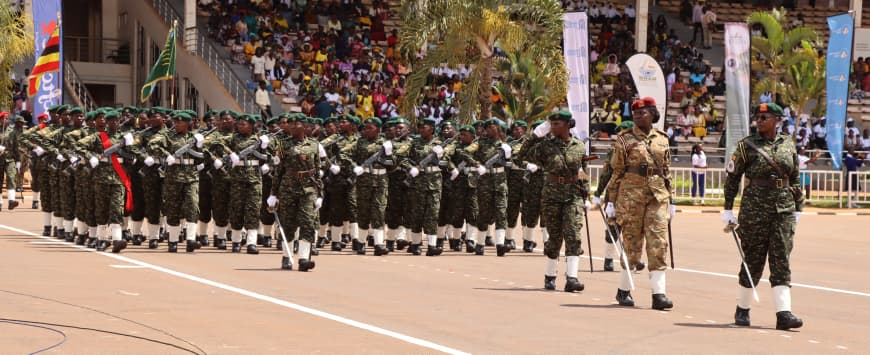
The celebrations were attended by Prime Minister Robinah Nabanja; Chief Justice Dr Flavian Zeija; Deputy Chief of Defence Forces Lt Gen Sam Okiding, ambassadors, Members of Parliament, government officials, women leaders, cultural and religious leaders, among others.