

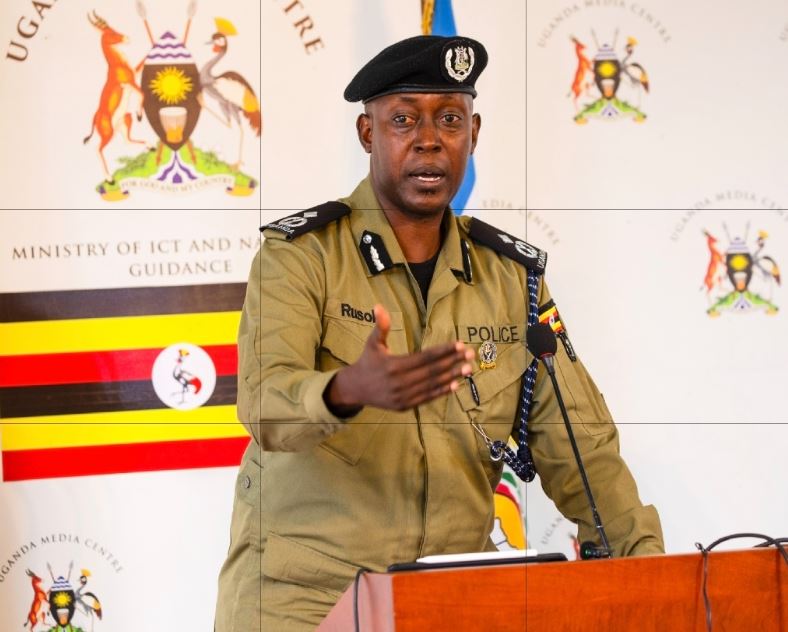
The general security situation across Uganda remains calm and stable, Uganda Police Force has said, noting that efforts to combat crime in all its forms continue to be intensified nationwide.
Police made the remarks during a joint press briefing held together with officials from the U.S. Embassy in Uganda to address growing concerns about visa-related fraud affecting Ugandans seeking travel opportunities abroad.
The U.S. Embassy delegation was led by the Senior Regional Security Officer, Mr. James Bloomer, who is expected to provide detailed information about visa fraud and the risks associated with fraudulent travel intermediaries.
Police spokesperson ACP Kituuma Rusoke said visa fraud is part of a broader pattern of impersonation and general fraud cases that are increasingly being reported across the country.
According to police, many Ugandans are falling victim to conmen who masquerade as intermediaries or “fixers,” falsely claiming to have connections within government institutions or international organisations.
“These criminals often impersonate officials from government agencies, ministries, NGOs, banks, telecom companies and other institutions in order to gain the trust of unsuspecting victims,” Rusoke said.
Police say the scammers usually target individuals who are unfamiliar with official procedures, those seeking shortcuts, people in urgent situations, or those desperate for opportunities abroad.
To appear credible, the fraudsters often use forged identification cards, fake introduction letters and unofficial phone numbers or social media accounts. In some instances, they even use the names and photographs of real officials or prominent individuals to deceive their victims.
After receiving money from victims, the suspects typically disappear or continue demanding additional payments, leaving victims financially exploited and often reluctant to report the incident due to embarrassment.
Police have reminded the public that legitimate government officials do not request money to perform their lawful duties or facilitate access to government services.
“If someone approaches you privately, asks you to keep the matter secret, and demands money to fix a file, secure a job, process a visa or obtain a grant, that should be treated as a clear warning sign of fraud,” Rusoke warned.
Members of the public have been advised to verify the identity of anyone claiming to represent a government institution or security agency by contacting official offices, using institutional hotlines, or visiting the nearest police station.
Police also cautioned against sending money or sharing personal information with individuals whose credentials cannot be independently confirmed.
Rusoke acknowledged that many victims often feel embarrassed or fear being blamed for falling victim to fraud, but encouraged them to report such cases to authorities.
“You are not the criminal. The person who abused your trust is. By reporting these incidents, you help us identify the perpetrators, protect others and dismantle the criminal networks behind these scams,” he said.
Police investigators are currently handling several cases of impersonation and fraud, and authorities say more arrests continue to be made.
Uganda Police Force has pledged to continue informing the public about emerging scams while working with partners and stakeholders to prevent more Ugandans from falling victim to fraud.
ACP Kituuma Rusoke
Public Relations Officer
Uganda Police Force