

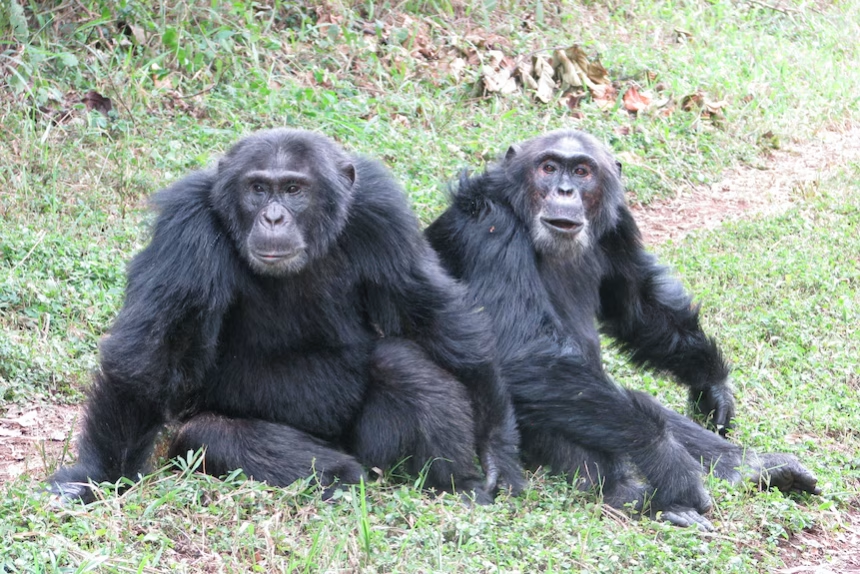
A fierce succession battle that gripped one of Kibale National Park’s largest chimpanzee communities for nearly two years has finally ended, with a male chimpanzee known as Rukara emerging as the new alpha leader after months of violent rivalry and internal unrest.
The leadership struggle unfolded within the Kanyantare chimpanzee community in the Kanyanchu sector of the park following the death of the former dominant male, Nfuuzi, in November 2023.
According to ranger guides and researchers at the park, Nfuuzi was allegedly attacked and killed by a group of six dissident chimpanzees, an incident that plunged the more than 120-member community into uncertainty and triggered prolonged competition for control.
Wildlife experts say the conflict was characterised by shifting alliances, aggression, intimidation and strategic manoeuvres, reflecting social and political dynamics often associated with human leadership contests.
Mr Richard Alicwamu, a ranger guide at Kibale National Park, said one of Rukara’s main challengers, Bahoire, was reportedly among the chimpanzees linked to the attack on Nfuuzi.
“This could have contributed to why he failed to gain full support from the majority of the community members,” Mr Alicwamu said.
He explained that chimpanzees display highly complex social behaviour, a trait scientists attribute to their close genetic relationship with humans. Chimpanzees are believed to share about 98.7 percent of their DNA with human beings.
Another ranger guide, Mr Bosco Bwambale, said leadership succession among chimpanzees is largely determined through displays of strength, strategic alliances and direct confrontation.
“A male remains alpha as long as he maintains strength, influence and support from the group,” Mr Bwambale explained.
He added that ageing alpha males often lose dominance once younger and stronger challengers begin asserting influence within the community.
Researchers say alpha males wield enormous authority within chimpanzee groups, including priority access to food and mating opportunities, as well as control over troop movement and security.
Since consolidating power, Rukara has reportedly taken charge of group movements and food searches. Observers at the park say even his former rival, Bahoire, has since been seen submitting to the new leader.
Chimpanzee researchers at Kibale further note that community breakaways are common, especially when groups grow too large to remain stable.
Ms Margaret Kobusingye, a chimpanzee researcher, cited the famous Ngogo chimpanzee community, which split after its population exceeded 200 members.
The Kanyantare community is estimated to roam across between 25 and 35 square kilometres of Kibale’s tropical forest ecosystem.
Beyond the dramatic power struggles among its primates, Kibale National Park remains one of Africa’s most significant biodiversity and tourism destinations.
Often referred to as the “Primate Capital of the World,” Kibale National Park spans about 766 square kilometres and is home to at least 13 species of primates, including an estimated 1,450 chimpanzees distributed across 13 communities.
The park also hosts forest elephants, hundreds of bird species, reptiles, butterflies and more than 250 tree species, making it one of Uganda’s richest natural ecosystems.
Only five chimpanzee communities within the park are currently habituated for tourism and research, attracting scientists and tourists from across the world eager to study and observe the social behaviour of mankind’s closest relatives in the wild.