
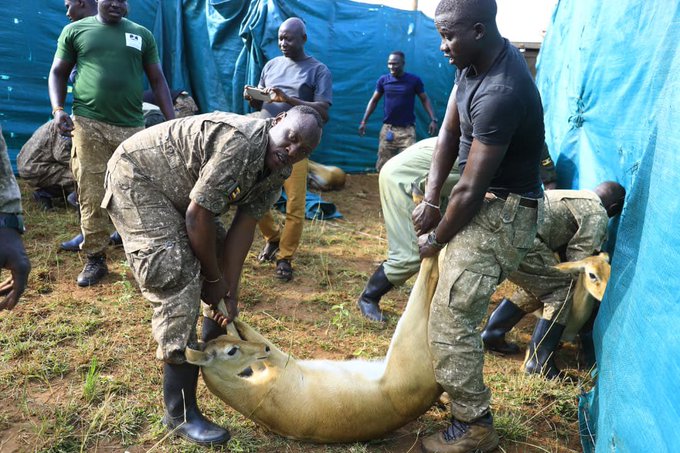
Uganda Wildlife Authority has begun relocating 200 Uganda kob from Murchison Falls National Park to Pian Upe Wildlife Reserve in an effort to strengthen wildlife populations and broaden the species’ distribution across the country.
The exercise is being carried out in phases and is part of efforts to establish viable populations in different protected areas.
The translocation is expected to give Pian Upe a stronger population of Uganda kob while reducing the concentration of the species in a single protected area.
Conservation officials say spreading wildlife populations across suitable habitats can improve their resilience to threats such as disease, habitat disturbance and poaching.
Restoring Pian Upe
Pian Upe is one of Uganda’s important wildlife reserves and forms part of the country’s network of protected areas.
The introduction of Uganda kob is expected to contribute to the reserve’s biodiversity and strengthen its potential as a wildlife destination.
UWA has previously undertaken similar wildlife restoration exercises in different parts of the country.
In January, four southern white rhinos were moved from Ziwa Rhino Sanctuary to Ajai Wildlife Reserve as part of efforts to establish a rhino population in the reserve.
The latest exercise builds on the same conservation approach of restoring or strengthening wildlife populations in suitable habitats.
Reducing concentration risks
The decision to move part of the Uganda kob population from Murchison Falls comes amid concerns about the risks of concentrating wildlife populations in a limited number of areas.
Dr Patrick Atimnedi, Commissioner for Veterinary Services, said diversifying habitats was important given the pressures affecting some protected areas.
“With the oil drilling happening at Murchison Falls National Park, constant encroachment and poaching, it is important that we diversify the habitats of these animals,” he said.
Establishing populations in several protected areas can provide a safeguard against the loss of a large proportion of a species if one habitat experiences a major disturbance.
However, successful translocation requires more than moving animals from one location to another.
Authorities must assess the availability of food and water, habitat conditions, security and other factors before releasing animals into a new environment.
Monitoring after release
The success of the Pian Upe operation will depend on how the animals adapt after their release.
UWA will need to monitor their survival, movement and reproduction while assessing their interaction with the reserve’s existing ecosystem.
The animals must also adapt to new sources of food, terrain and social conditions.
Wildlife specialists also have to manage risks associated with capture and transportation, including stress, injury and possible disease transmission.
The careful selection of animals is equally important to ensure that the new population remains healthy and genetically viable.
Boost for conservation and tourism
The translocation is expected to contribute to broader efforts to diversify Uganda’s wildlife tourism opportunities.
Pian Upe is among the protected areas with potential to attract visitors interested in wildlife and nature-based tourism.
A stronger population of Uganda kob could increase the reserve’s wildlife appeal while supporting conservation awareness and local economic activity.
UWA has undertaken other wildlife translocations in recent years, including movements involving giraffes and other species between protected areas.
The authority’s wider strategy is aimed at maintaining viable wildlife populations across Uganda rather than allowing conservation gains to remain concentrated in a few locations.
Uganda has 10 national parks and a wider network of wildlife reserves, sanctuaries and community wildlife management areas, providing diverse habitats for conservation programmes.
For the 200 Uganda kob, the immediate target is to ensure a safe transition to Pian Upe. In the longer term, their survival and ability to reproduce will determine whether the operation delivers the intended conservation gains.
The exercise therefore represents not simply a movement of animals, but part of a broader attempt to build stronger and more resilient wildlife populations across Uganda’s protected-area network.