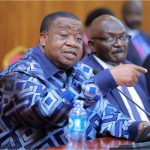

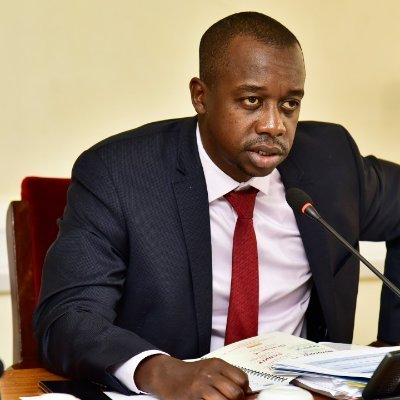
The government has defended its proposal to borrow Shs139 billion from the French Government to establish a regional cancer treatment centre in Mbarara, saying the facility will bring essential services closer to patients and ease pressure on the Uganda Cancer Institute (UCI) in Kampala.
The Minister of State for Primary Health Care, Charles Ayume, told Parliament’s Committee on Health on Tuesday, October 13, 2026, that the Mbarara Regional Oncology Centre is among four planned regional facilities intended to decentralise cancer care across the country.
Ayume said patients travelling long distances for treatment face substantial transport and accommodation costs, often accompanied by caregivers, making access to specialised services difficult.
“The out-of-pocket expenditure of someone travelling from Kisoro or Kaabong District, who also has to come with a caretaker, is costly. That is why we are trying to decentralise these services,” Ayume said.
The proposed borrowing was presented to Parliament by the Minister of Finance, Planning and Economic Development, Henry Musasizi, on September 29, 2026.
According to Ayume, the Mbarara facility will initially focus on cancer screening, chemotherapy and surgery. He said expanding access to these services would promote early diagnosis and help reduce preventable deaths.
“In my district, Koboko, when one comes to Mulago for cancer treatment, they return in a body bag because there are no screening services and no early diagnosis. This is what we want to address through the regional cancer centres,” he said.
Beyond serving Ugandan patients, Ayume said the centre could also strengthen medical tourism by attracting patients from neighbouring East African Community countries and elsewhere on the continent. He noted that foreign nationals currently account for approximately 20 per cent of patients receiving treatment at UCI.
“The priority of this centre is Ugandans but in the spirit of Pan-Africanism, we will use it for medical tourism, targeting the East African Community and other African countries,” said Ayume.
The minister also said plans were underway to introduce proton therapy, an advanced cancer treatment that uses targeted radiation to destroy tumours while limiting damage to surrounding healthy tissue. He said the technology would help position UCI as a leading cancer treatment centre in Africa.
However, UCI Executive Director Dr Jackson Orem clarified that radiotherapy would not be available at the Mbarara centre during its initial phase because of funding limitations. Patients requiring the service will continue to be referred to the institute in Kampala.
“Instead of spreading ourselves thin, we decided to first provide basic services and later introduce the more sophisticated modes of treatment,” Orem said.
Mbarara University of Science and Technology (MUST) Deputy Vice-Chancellor Prof. Joseph Ngonzi informed the committee that the university had set aside 8.5 acres of land for the project and was working with UCI to finalise a memorandum of understanding.
“The University Council approved the request and a letter of offer was given to UCI. We are in the process of finalising the memorandum of understanding regarding this engagement,” said Ngonzi.
Ngonzi added that the facility would complement the university’s efforts to expand specialised medical training. He said MUST had trained personnel, including biomedical engineers, who could support the centre’s operations.
Committee Chairperson Julius Rude, meanwhile, sought clarification on whether the government’s Shs16 billion counterpart contribution had been included in the national budget.
“If the counterpart funding is not provided for in the budget, it will delay the project or it will get stuck along the way,” Rude said.
Peter Kiti, the NRM representative for T’oo County, called for a dedicated fund to help patients access expensive cancer medicines, which he said were beyond the means of many ordinary Ugandans.
“Cancer medicines are expensive and beyond the reach of an ordinary person. We need a special fund to support their procurement and make treatment more affordable,” Kiti said.
Kiti also urged the government to support scientific research into herbal remedies reportedly used in cancer treatment.