

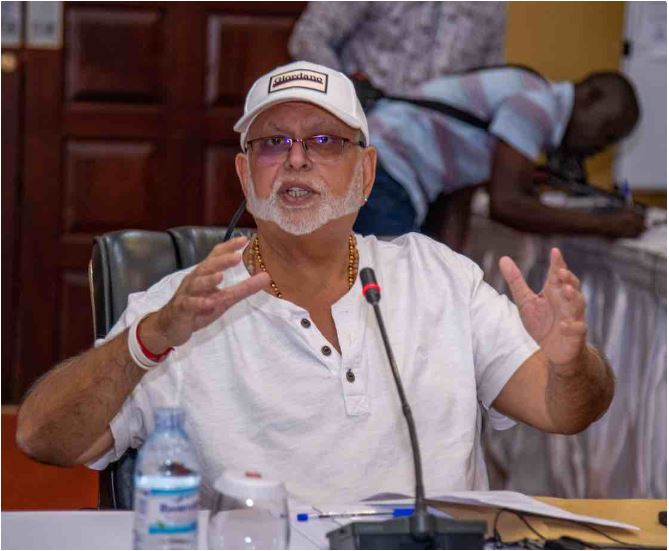
Dr. Sudhir Ruparelia’s journey to becoming one of Uganda’s most prominent businessmen began with a difficult chapter in his life: the forced departure from Uganda during the 1972 expulsion of Asians and the challenge of rebuilding his future in the United Kingdom.
Decades later, the Ruparelia Group chairman has established business interests across real estate, hospitality, education and other sectors. However, his rise in business was preceded by years of uncertainty, demanding jobs, financial discipline and a determination to create opportunities for himself.
Speaking during an interview at Crane Chambers, Dr. Ruparelia reflected on his early experiences in Britain, describing the struggles that shaped his outlook on work, investment and entrepreneurship.
Starting Over in Britain
Dr. Ruparelia arrived in the United Kingdom on November 6, 1972, among the thousands of Ugandan Asians displaced by the expulsion ordered by Idi Amin.
After spending his first night at a government reception centre, he travelled to London to stay with relatives as he began adjusting to life in a new country.
Accommodation was limited, with seven people sharing a modest two-bedroom house. The difficult living conditions reflected the challenges faced by many displaced families trying to find stability and establish themselves in unfamiliar surroundings.
Although he later reunited with his parents, who had secured council housing, Dr. Ruparelia was determined to become financially independent rather than rely entirely on family support.
His search for employment took him to several towns, including Birmingham, Manchester and Stockport, as he explored different ways of earning a living.
One particularly difficult experience involved travelling with his uncle to meet a man who had promised to help them obtain jobs at the Ford Motor Company. After arriving, they discovered that the man was unavailable.
Having travelled a long distance, the two waited for hours and eventually spent the night outdoors, using cardboard boxes for shelter. The man returned the following morning and apologised, saying he had not known they were coming.
The anticipated opportunity never materialised. Recruitment restrictions and age requirements prevented Dr. Ruparelia from securing the job, forcing him to continue looking elsewhere.
Rather than give up, he accepted factory work involving physically demanding duties, including working beneath machinery used to coat laboratory test tubes with hot wax.
The experience marked another stage in his determination to make progress despite limited opportunities.
Balancing Work, Education and Ambition
Dr. Ruparelia later considered joining the Royal Air Force after passing the required entrance assessments. He viewed military service as a possible route to further education and a stable career.
However, because he was still under 18, parental consent was required. His mother declined to approve his entry, bringing that ambition to an end.
He subsequently returned to London and rented a small one-bedroom apartment while combining employment with his studies.
His jobs included stocking supermarket shelves, cleaning and assisting in bakery operations. He attended classes during the day and worked at night, earning about £15 a week, according to his account.
He also drove a taxi on weekends to supplement his income, often spending much of the period between Friday evening and Sunday night working behind the wheel.
The demanding routine allowed him to save money and gradually improve his financial position.
His experience illustrates an important aspect of his early business journey: progress came through combining different sources of income with a willingness to take on work that offered limited immediate rewards.
First Property Investment at 20
By 1976, Dr. Ruparelia had accumulated savings of approximately £6,000. At just 20 years old, he used the money to purchase his first house, valued at £15,250, financing the remaining amount through a mortgage after making a deposit.
That purchase became an early step towards his later involvement in property investment.
Rather than treating his earnings solely as money for immediate consumption, he directed his savings towards an asset that could provide a foundation for future investments.
Over time, he acquired additional properties, building experience in the sector that would later become a major part of his business interests.
His early approach highlights the role that disciplined saving, access to financing and a willingness to invest can play in building wealth. It also reflects the importance of carefully assessing debt and investment risks when purchasing property.
Family Support During His Early Years
While establishing himself in Britain, Dr. Ruparelia also met the woman who would become his wife.
The meeting followed an encounter on a London bus while he was travelling with his cousin to attend a wedding. His cousin recognised two women who worked at a nearby supermarket, and Dr. Ruparelia later took a weekend job at the same supermarket, where he met his future wife.
She was working while pursuing her studies, and their relationship developed despite reservations from some members of her family.
According to Dr. Ruparelia, her support became important as he pursued property investments and worked towards greater financial stability.
The couple married in London in 1977 and later had three children: Meera, Sheena and Rajiv.
Family responsibilities also influenced his thinking about financial security and the future. He has recalled wanting to establish a stable foundation before raising children, reflecting the importance he placed on planning and providing for his family.
Returning to Uganda to Pursue New Opportunities
Despite establishing a life in Britain, Dr. Ruparelia eventually decided to return to Uganda, a move that would shape the next phase of his business career.
In 1985, he travelled back to East Africa, first passing through Nairobi before returning to Uganda. His wife initially remained in Britain while he explored opportunities at home.
Explaining his attachment to the continent, he said: “Africa is either in your blood or it is not in your blood,”
The decision came at a time when Uganda was seeking to rebuild its economy after years of political instability and economic disruption.
For Dr. Ruparelia, returning home meant applying the experience and financial discipline developed in Britain to a market he believed offered opportunities for investment.
He initially ventured into the salt trade before expanding into other businesses. These activities eventually contributed to the development of the Ruparelia Group, which grew to encompass interests in several sectors of Uganda’s economy.
In 1991, he purchased his first house in Uganda, a step that reflected his renewed commitment to the country after years abroad.
From Personal Struggle to Business Expansion
Dr. Ruparelia’s experience demonstrates how migration, work and investment shaped his entrepreneurial development. His early years in Britain were marked by uncertainty, but they also exposed him to different working environments and opportunities to save and invest.
His eventual return to Uganda allowed him to pursue business opportunities in a familiar market while drawing on the experiences he had gained overseas.
The expansion of the Ruparelia Group into property, hospitality, education and other industries reflects the scale of the business interests he developed over subsequent decades.
His story also highlights the broader contribution that returning members of the Ugandan diaspora can make when they bring skills, capital and international experience into the domestic economy.
For aspiring entrepreneurs, the central lessons lie in persistence, financial discipline, careful investment and the ability to recognise opportunities in changing circumstances.
From leaving Uganda as a teenager in 1972 to building a diversified business group after returning in 1985, Dr. Ruparelia’s journey remains a prominent example of a business career shaped by adversity, ambition and a decision to invest in his home country.