

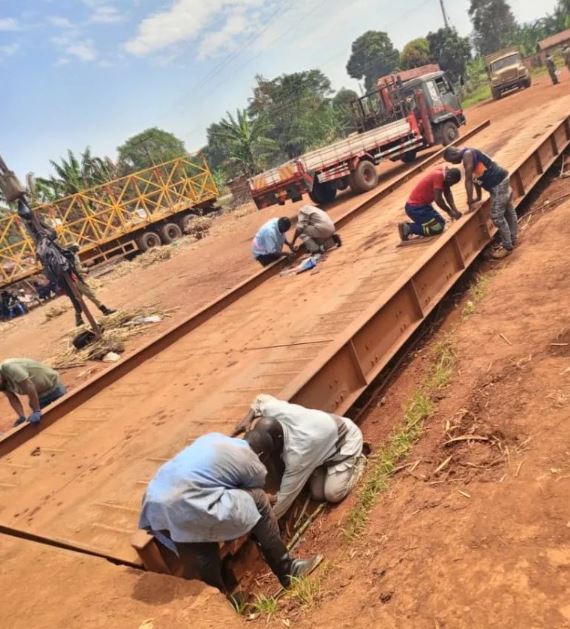
A police directive ordering the removal of all roadside sugarcane weighbridges in Masindi District has sparked outrage among outgrowers, who warn the move could roll back gains made in transparency, fair pricing and competition within the sugar industry.
In a letter dated February 12, 2026, Uganda Police Headquarters instructed the Albertine North Regional Police Commander to provide security to officials from the Ministry of Trade, Industry and Cooperatives undertaking the dismantling of the privately operated weighbridges.
The police action follows instructions from the Minister of Internal Affairs, Maj. Gen. (Rtd) Kahinda Otafiire, who on 6th February 2026 directed the IGP to ensure that roadside weighbridges are halted and relocated in line with a 2025 Ministerial Directive issued by the Trade Ministry aimed at combating sugarcane theft.

The directive requires that all sugarcane be weighed only at factories and bans weighbridges along roads and trading centres.
While government presents this as an anti-theft measure, outgrowers in Masindi and across the Bunyoro sugar belt say the directive is a direct attack on farmer empowerment and a dangerous return to a system that previously enabled factories to cheat them.
How Roadside Weighbridges Empowered Farmers
For years, farmers had only one option — deliver their cane to factory premises and accept whatever weight the factory weighbridge declared. There was no independent verification, no transparency, and no bargaining power.
This created what farmers long described as a “factory-controlled weighing system” where the buyer determined the tonnage, the price, and the final payment.
The introduction of independent roadside weighbridges fundamentally changed this.

Farmers could now weigh their cane before delivery, document the tonnage, and approach factories with evidence. This shifted negotiations from blind trust to informed bargaining.
These weighbridges also served the wider farming community by weighing maize, cassava, beans and other produce, becoming important commercial infrastructure in rural trading centres.
Most importantly, they introduced transparency into a system farmers had long distrusted.
“When we started weighing our cane ourselves, factories stopped under-declaring our tonnage because they knew we had proof,” a Masindi outgrower told Spy Uganda.
Directive Threatens To Restore Factory Monopoly Outgrowers argue that by banning roadside weighbridges, government is unintentionally restoring a monopoly where factories once again become the sole controllers of weighing.
They say that weighing at factory premises, without an independent reference point, reintroduces the same opaque system that previously disadvantaged farmers.
The Trade Ministry directive promises transparency at factory weighbridges and proper documentation. But farmers say documentation from a factory-controlled system without external verification offers no protection.
“We have been here before. We know how this ends,” one farmer said. “If the factory is the only one weighing, the factory is the only one deciding.”
Impact On Fair Pricing And Healthy Competition
The roadside weighbridges had also created healthy competition among factories.
With farmers aware of their exact tonnage, factories were forced to offer more competitive prices to attract cane. Farmers could compare offers and negotiate based on known weight.
This market dynamic improved pricing fairness across the region.
By removing the weighbridges, farmers fear factories will again dictate prices without challenge because farmers will no longer have independent proof of what they are selling.
Industry observers say this risks distorting competition in favour of millers and against outgrowers.
“Those weighbridges were the farmer’s negotiating table,” a cooperative leader noted. “Without them, farmers return to being price takers, not price negotiators.”
Police Involvement Raises Tensions
The involvement of police, and the possibility of FFU deployment, has heightened anxiety among farmers who feel they are being criminalized for operating infrastructure that improved fairness in trade.
The police letter clearly anticipates resistance, instructing commanders to provide security during the removal exercise.
For many farmers, this is no longer about sugarcane theft. It is about who controls information, who controls pricing, and who holds power in the sugar value chain.
As Ministry officials prepare to move into Masindi under police guard, outgrowers are asking a simple but powerful question:
Why remove the very tool that helped farmers stop being cheated?
For the farmers of Bunyoro, the roadside weighbridge was not a theft point. It was a transparency point.
And its removal, they say, marks the return of a system they fought hard to escape.