

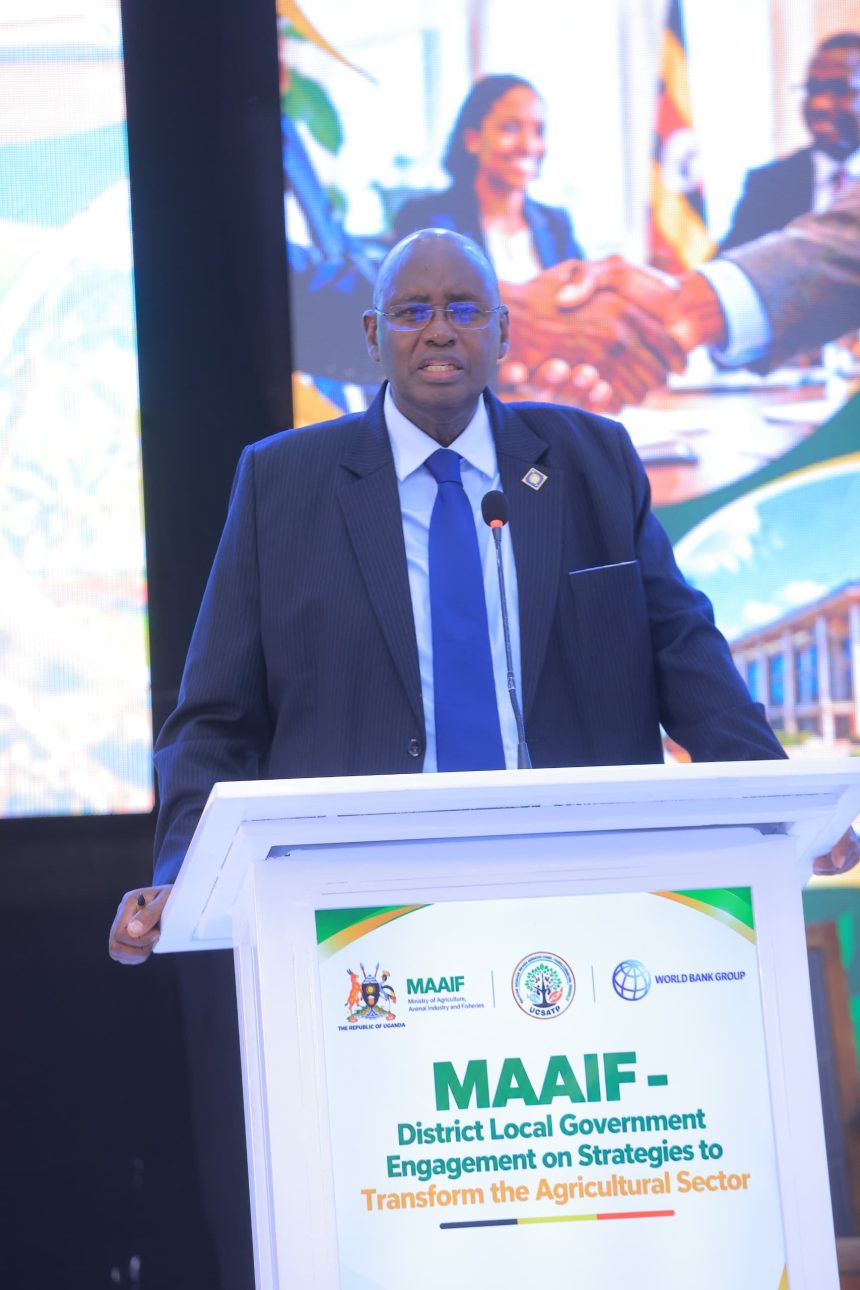
Hon. Bright Rwamirama, Minister of State for Animal Industry at the Ministry of Agriculture, Animal Industry and Fisheries (MAAIF), has called on district leaders, veterinary officers and farmers to strengthen efforts to control Foot and Mouth Disease (FMD), warning that outbreaks are undermining farmer incomes, livestock trade and access to lucrative markets.
Speaking at the district leaders’ engagement on strategies to transform Uganda’s animal industry, Rwamirama said protecting the national herd from disease is critical to growing the livestock sector and transforming agriculture into a commercial enterprise.
Uganda has about 16.4 million cattle, 17.5 million goats, 5 million sheep and 8 million pigs. Rwamirama said diseases such as FMD threaten this productive base and restrict access to markets where livestock and livestock products can fetch better prices.
He pointed to the dairy industry as an example of the sector’s potential. Milk production has grown from about 750 million litres in the early 1990s to approximately 5 billion litres today.
Uganda now has 871 milk collection centres, 23 regional processing centres, 371 milk tankers and 162 small, medium and large processing plants, with installed processing capacity of about 5.4 million litres per day.
The dairy sector earns about US$380 million annually in export revenue and supports an estimated 2.7 million jobs across the value chain.
Rwamirama warned that FMD outbreaks have far-reaching consequences for farmers, processors, traders and the wider economy.
“One person who refuses to observe disease-control measures can actually spoil the whole industry and cripple the economy,” he cautioned.
Government has shifted from providing free FMD vaccines to a cost-sharing model. Farmers are required to contribute Shs8,000 for cattle and pigs and Shs4,000 for sheep and goats, while Government continues to meet other costs of the vaccination programme.
Government has procured 44 million doses of FMD vaccine and invested in cold-chain infrastructure, including refrigerators, solar-powered systems and ice boxes, to maintain vaccine efficacy.
Rwamirama said FMD vaccination should be undertaken twice a year, at six-month intervals, and urged district leaders to ensure full implementation.
He also warned against the illegal sale or diversion of Government vaccines, saying veterinary officers found engaging in such practices should face arrest and prosecution.
The Minister further challenged districts to strengthen agricultural extension and ensure veterinary and extension workers regularly reach farmers with practical support.
He urged farmers and leaders to treat livestock farming as a business, noting that disease restrictions can leave farmers with animals they cannot sell.
“If you have 300 cows and you cannot sell even one cow because of disease restrictions, you have 300 animals but you are not in business,” he said.
Rwamirama noted that Uganda is expanding markets for milk and other livestock products across Africa and beyond, but access to higher-value markets will depend on effective disease control.
He said forthcoming regulations will increasingly link animal movement, access to livestock markets, slaughter facilities and milk collection centres to vaccination status.
“If we have to develop tenfold, we must do things differently,” Rwamirama said, calling for coordinated action by national and local governments, veterinary officers and farmers to protect Uganda’s livestock economy and unlock its commercial potential.