

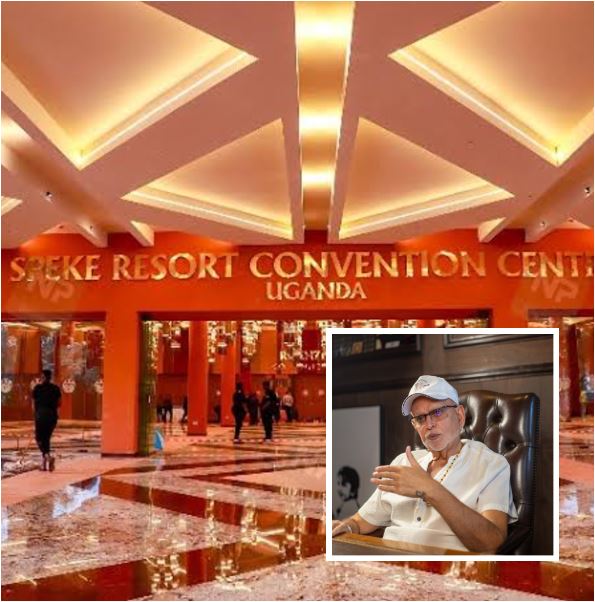
Uganda’s growing reputation as a destination for international conferences, high-profile business gatherings and summits is increasingly being reflected in the recognition earned by its leading hospitality facilities.
At the centre of this development is Speke Resort Munyonyo, owned by city tycoon Dr Sudhir Ruparelia which has once again attracted international attention after being recently named the Best Luxury MICE Resort Globally at the 2026 Luxe Global Awards.
Speke resort’s latest international award highlights how sustained private investment in hospitality is strengthening Uganda’s capacity to host major global conferences, attract visitors and grow its tourism industry.
The recognition is more than a prestigious achievement for the resort, it highlightd how Dr Sudhir Ruparelia’s private-sector investment, commitment to quality hospitality and development of modern conference facilities are helping position Uganda as a competitive destination for international business tourism.
For businessman Dr Sudhir who chairs the Ruparelia Group, the award adds to the profile of a hospitality portfolio that has helped shape Uganda’s hotel, leisure and conference sectors.
Investment that attracts international events
Located on the shores of Lake Victoria in Munyonyo, Kampala, Speke Resort has established itself as one of Uganda’s prominent venues for major conferences, corporate meetings, diplomatic engagements, exhibitions and international summits.
Its appeal lies in the combination of conference facilities, accommodation, dining, leisure services and a lakeside setting that offers delegates more than a conventional meeting venue.
For organisers of international events, these features matter. Hosting a major summit requires the ability to accommodate delegates, facilitate meetings, provide food and accommodation, support event logistics and deliver a reliable guest experience within one location.
When these services are available under one roof, event organisers can manage complex programmes more efficiently while delegates enjoy a more convenient experience, something Dr Sudhir has mastered to the top.
Speke Resort’s latest international recognition signals the importance of investing in facilities that meet the expectations of global conference organisers and travellers.
Why major summits choose Speke Resort Munyonyo
Uganda’s ability to host high-level gatherings like the Nonaligned Movement (NAM) summit and the Group of 77 (G77) summit (hosted at Speke Resort Convention Centre Munyoyo in January 2024) depends partly on the availability of venues with sufficient space, professional hospitality services and the capacity to accommodate international guests.
Speke Resort has become a prominent choice for such events because it combines business facilities with the accommodation and leisure amenities required for conferences that run over several days.
Its location in Kampala also gives visiting delegates access to the capital’s business community, government institutions and other services, while its setting along Lake Victoria provides an attractive environment for networking and hospitality.
Major conferences bring together government officials, business executives, investors, diplomats, development partners and industry experts. Beyond the discussions held inside conference rooms, these gatherings create opportunities for business networking, investment promotion and international collaboration.
A successful conference venue therefore contributes not only to the event itself but also to the wider experience that shapes how visitors perceive the host country.
While Speke Resort Munyonyo is not the only facility serving Uganda’s conference market, its continued prominence illustrates the value of having internationally competitive hospitality infrastructure at home.
The Ruparelia Group’s wider hospitality footprint
Speke Resort Munyonyo forms part of the Ruparelia Group’s broader investment in Uganda’s hospitality and leisure industry. The group’s portfolio includes establishments such as Speke Hotel and Kabira Country Club, Speke Apartments, among others serving different accommodation, business, leisure and corporate hospitality needs.
Together, such facilities contribute to the range of options available to business travellers, tourists, organisations and event planners visiting Uganda.
The development of different hospitality properties also helps serve multiple market segments, from visitors seeking luxury accommodation to businesses looking for meeting facilities and travellers requiring convenient places to stay.
Dr Sudhir Ruparelia’s investments demonstrate how private capital can contribute to building tourism infrastructure that serves both domestic and international markets.
International awards can further strengthen the visibility of these facilities, helping them reach prospective clients and event organisers who may be considering Uganda for future conferences or holidays.
Furthermore, Dr Sudhir has maintained quality services, investing in facilities, responding to changing customer expectations and delivering consistently positive guest experiences across all his facilities.
How business tourism boosts Uganda’s economy
Meetings, Incentives, Conferences and Exhibitions, commonly known as MICE tourism, are an important segment of the wider travel industry.
Unlike leisure tourism alone, MICE tourism attracts visitors whose trips are organised around conferences, professional meetings, exhibitions, incentive programmes and business engagements.
These visitors create demand across several sectors of the economy. Hotels accommodate delegates, restaurants serve guests, transport operators move visitors, and suppliers provide goods and services required to organise events.
Local businesses can also benefit from exhibition opportunities, professional networking and connections with international investors.
For Uganda, attracting more international conferences presents an opportunity to diversify tourism beyond traditional wildlife, nature and cultural experiences. It also allows the country to showcase its investment opportunities, business environment, culture and hospitality to influential visitors.
When conferences attract international delegates who spend money locally, the benefits can extend to employees, suppliers, transport providers, restaurants and other service businesses.
The longer-term impact depends on how effectively the country converts these visits into repeat travel, investment relationships and wider tourism activity.
Recognition that puts Uganda in the spotlight
The 2026 Luxe Global Awards recognition gives Speke Resort Munyonyo another opportunity to showcase its facilities to an international audience.
For Uganda, the success of a locally developed hospitality property demonstrates the potential of domestic investment to support the country’s ambitions in business tourism.
International recognition can strengthen a venue’s reputation among event planners and organisations evaluating destinations for future gatherings. It can also provide a platform for promoting Uganda as a country capable of hosting sophisticated international events.
Such recognition is particularly valuable in a competitive market where destinations across Africa and beyond are investing in conference infrastructure and seeking to attract global business travellers.
Uganda’s ability to compete will depend not only on individual hotels but also on the wider visitor experience, including accessibility, transport, safety, professional services and the quality of tourism attractions available to delegates.
Beyond awards: The importance of sustained investment
For the Ruparelia Group, the latest accolade reflects the importance of maintaining hospitality facilities that can serve demanding international markets.
For Uganda, it highlights a broader development opportunity: when local investors build and maintain competitive hotels, resorts and conference venues, they help create the infrastructure needed to attract international visitors and major events.
Speke Resort Munyonyo’s combination of accommodation, conference services and leisure facilities positions it to serve both business and leisure travellers, including delegates who may extend their stays to explore the country.
The challenge now is to build on this recognition by attracting more international events, maintaining service standards and strengthening the links between conference tourism and Uganda’s wider tourism economy.
Ultimately, the resort’s international recognition is not simply about a trophy. It highlights how sustained investment in hospitality can support Uganda’s ambition to become a stronger destination for global conferences, business travel and tourism.