
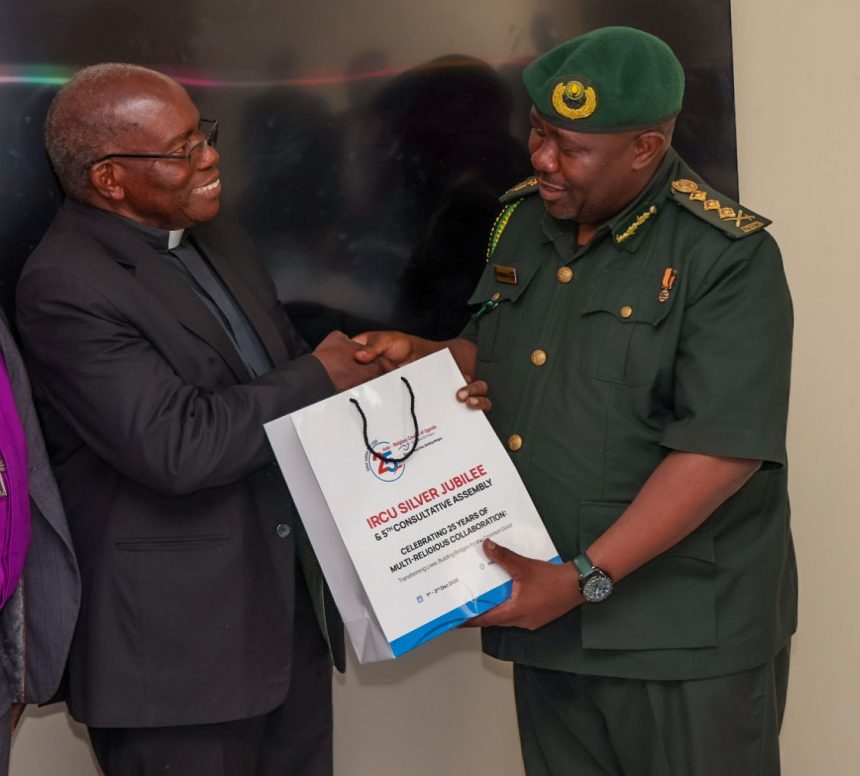
Uganda Wildlife Authority (UWA) is seeking to strengthen wildlife conservation, promote tourism and improve community livelihoods through a proposed partnership with the Inter-Religious Council of Uganda (IRCU). The partnership aims to use religious institutions and their community networks to raise conservation awareness, encourage public participation and promote peaceful coexistence between people and wildlife.
The proposal was discussed during a meeting between UWA’s top management and an IRCU delegation at Skyz Hotel in Naguru, Kampala, on Wednesday, 21 October 2026. The discussions focused on establishing a practical framework for cooperation through a Memorandum of Understanding (MoU), joint conservation awareness campaigns, community engagement, tourism promotion and efforts to address human-wildlife conflict.
Speaking during the meeting, UWA Executive Director Dr. James Musinguzi emphasised that the partnership must move beyond signing an agreement to delivering tangible results for conservation and communities.
“We don’t want an MoU which is signed and remains on paper. We are going to sign it, develop a work plan and work together,” Dr. Musinguzi said.
He called for a modest, costed programme that both institutions could implement with the available resources before expanding the partnership to other areas. He noted that the draft MoU had been approved in principle, with board approval and signing identified as the next steps.
To advance the process, Dr. Musinguzi tasked UWA Commissioner for Legal and Corporate Affairs, Mr. Chemonges Sabila, who also serves as Secretary to the Board, with ensuring that the agreement is presented for consideration. He also proposed identifying two or three potential pilot locations where joint activities could begin.
As part of the proposed cooperation, Dr. Musinguzi pledged UWA’s participation in IRCU’s planned National Youth Colloquium in November 2026. The Authority would contribute speakers, participate in exhibitions and provide support within its means. He also welcomed the invitation to IRCU’s 25th-anniversary celebrations.
IRCU Board Chairman Msgr. Charles Kasibante highlighted the important role religious institutions can play in promoting environmental stewardship, conservation education and community mobilisation.
He noted that churches, mosques, schools and other faith-based networks offer established channels through which conservation messages can reach communities and encourage responsible environmental practices.
Through these networks, the proposed partnership seeks to help communities better understand the value of wildlife and natural habitats while promoting tourism and the social and economic benefits associated with conservation.
Presenting amendments to the draft MoU, Mr. Sabila outlined key areas of cooperation, including training religious leaders in conservation, conducting joint public awareness campaigns, facilitating community dialogue on human-wildlife conflict, mobilising resources and promoting tourism.
The draft agreement also provides for joint planning, information sharing, investment opportunities and the appointment of focal persons to coordinate activities. These arrangements are intended to clarify responsibilities and guide the development of a costed work plan, giving both institutions a framework for turning their commitments into coordinated action.
UWA Commissioner for Community Conservation and Ex-situ Services, Mr. David Musingo, emphasised the need to reconnect people, particularly young people, with nature through conservation education and visits to natural attractions.
He introduced his approach as “CUA” — Connect, Understand and Act — explaining that people should first connect with nature, understand its value and then take practical steps to protect it.
“My approach is to connect people to nature so that they appreciate it,” Mr. Musingo said, urging individuals and institutions to take greater responsibility for protecting wildlife and the environment.
He also encouraged religious institutions to establish gardens featuring indigenous and medicinal plants, with technical guidance from conservation experts. Such initiatives could provide opportunities for communities, especially young people, to learn about the importance of native plant species and their role in supporting healthy ecosystems.
Highlighting the link between conservation and community livelihoods, Mr. Musingo explained that UWA shares 20 per cent of gate collection revenue with neighbouring communities to support projects aimed at improving livelihoods and reducing human-wildlife conflict.
He cited approximately Shs9 billion earmarked for communities neighbouring Murchison Falls National Park, stressing the importance of investing in environmentally friendly projects that enable communities to benefit from conservation while protecting wildlife and natural resources.
The proposed UWA-IRCU partnership presents an opportunity to strengthen the connection between conservation institutions, religious leaders and communities. By combining UWA’s conservation expertise with the reach of faith-based networks, the two institutions aim to promote greater public understanding of wildlife conservation, encourage responsible environmental practices and support tourism development and community livelihoods.