

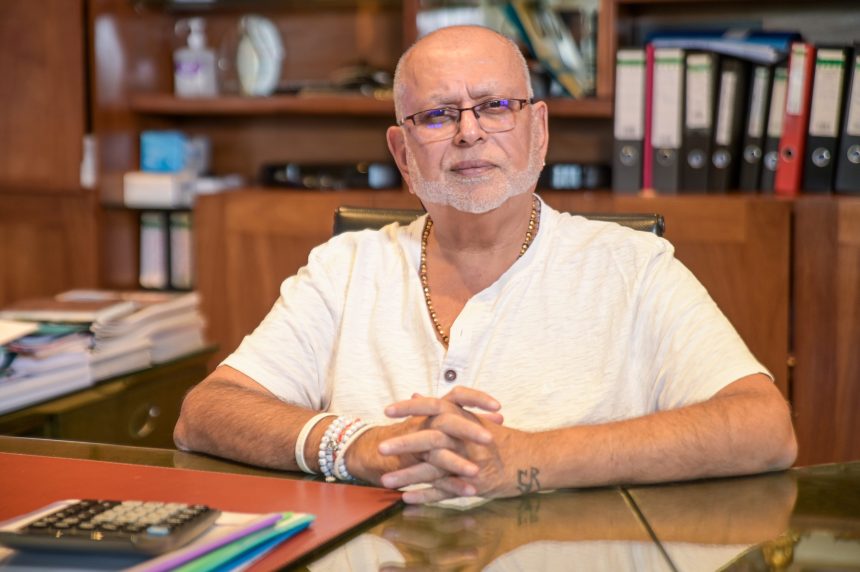
Ugandan businessman and Nepal’s Honorary Consul to Uganda, Dr Sudhir Ruparelia, has extended condolences and solidarity to the people of Nepal following a catastrophic flooding disaster that has claimed hundreds of lives and left thousands of people missing.
Ruparelia, who has represented Nepal as its Honorary Consul in Uganda since 2020, expressed sympathy to families mourning their loved ones while commending communities and responders working under difficult conditions to assist survivors and locate those still unaccounted for.
“My heartfelt condolences go to the families who have lost loved ones, and my thoughts and prayers are with all those affected by this tragedy,” Sudhir said.
He recognised the efforts of government authorities, security agencies, emergency responders, volunteers and members of the public who have joined rescue and recovery operations across the affected areas.
“At this difficult time, we stand in solidarity with the people of Nepal and pray for their safety, strength and swift recovery,” he said.
The disaster was triggered by a major glacial collapse in the Himalayan region on Wednesday, sending a powerful surge of water, ice, rock, mud and debris into river systems in mountainous areas along the Tibet border.
The resulting floods swept through settlements and caused extensive destruction to homes, roads, bridges and other vital infrastructure. Several hydropower installations were also affected, further compounding the disruption caused by the disaster.
Rescue and recovery teams have continued searching for missing people, although persistent rainfall and challenging terrain have made access to some affected locations difficult and repeatedly hampered emergency operations.
By Saturday, reports indicated that the combined death toll in Nepal and Tibet had surpassed 600, while thousands of people were still unaccounted for. Authorities continued revising the figures as rescue teams accessed isolated areas and recovered additional victims.
The catastrophe has also affected international visitors, with foreign tourists and pilgrims among those caught in the disaster while travelling through the Himalayan region.
In response to the scale and complexity of the emergency, the Nepalese government has appealed for specialised international support. Foreign Minister Shisir Khanal said additional expertise was needed for operations such as tunnel rescues, restoration of damaged transport and communications networks, DNA-based identification of victims and management of recovered remains.
India has responded with relief assistance, sending essential supplies such as food, medicines, blankets and water-purification materials. It has also offered specialised disaster-response assistance and temporary bridges. Other international partners have similarly begun mobilising support as assessments reveal the extent of the destruction.
The disaster is also expected to have significant economic consequences for Nepal.
Finance Minister Swarnim Wagle told Reuters that preliminary estimates put the cost of rebuilding flood-damaged areas at between $4 billion and $5 billion. He cautioned, however, that the figure could change as authorities continue conducting detailed assessments of the destruction.
If confirmed, the projected reconstruction cost would amount to almost 10 per cent of Nepal’s economy.
Damage to roads, bridges, towns and hydropower infrastructure is expected to create additional economic pressure in a country that relies significantly on tourism, remittances and electricity generation. Reports indicate that projects accounting for more than 12 per cent of Nepal’s power-generation capacity were affected.
The anticipated reconstruction expenditure remains below the approximately $9 billion spent by Nepal after the 2015 earthquake, one of the country’s worst natural disasters, which claimed nearly 9,000 lives and destroyed hundreds of thousands of homes. However, officials stress that the current flood assessment remains preliminary and could rise as further damage is recorded.
Ruparelia’s message comes against the backdrop of his diplomatic responsibilities as Nepal’s Honorary Consul in Uganda.
He was appointed to the position by former Nepalese President Bidhya Devi Bhandari and presented his credentials to Uganda’s then Foreign Affairs Minister Sam Kutesa in March 2020. His appointment coincided with the establishment of Nepal’s first consular office in Uganda at Crane Chambers on Kampala Road.
Nepal’s diplomatic records list Ruparelia as the country’s Honorary Consul in Uganda, with the consular office located in Kampala.
In that capacity, his responsibilities include supporting stronger bilateral relations between Uganda and Nepal and facilitating cooperation and engagement between the two countries.
As emergency teams continue their search for missing people and provide assistance to affected communities, Nepal is also confronting the enormous task of rebuilding damaged roads, bridges, power facilities and other critical infrastructure.
For Uganda’s honorary representative of Nepal, the tragedy has prompted a message of support from Uganda to the people of a country confronting one of its most severe natural disasters in recent years.
“We stand in solidarity with the people of Nepal and pray for their safety, strength and swift recovery,” he said.