
By Vensor Muhumuza
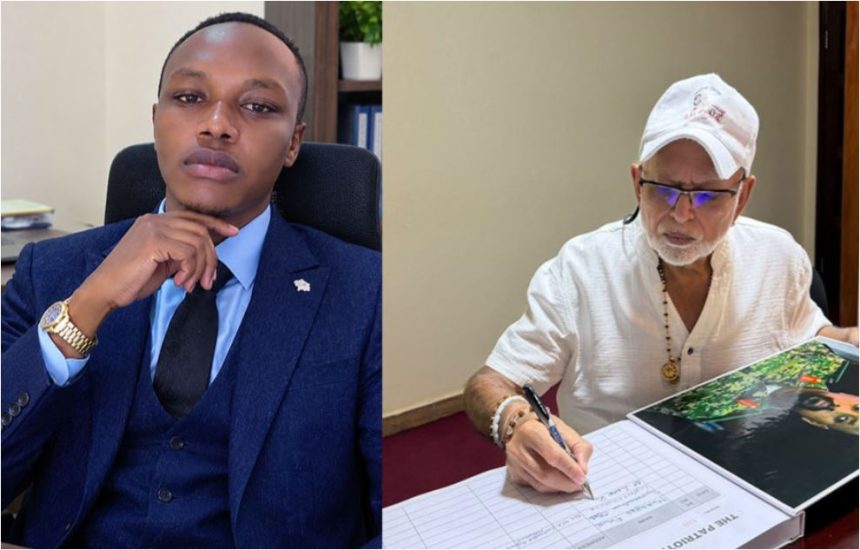
When businessman Dr. Sudhir Ruparelia put his name behind Gen. Muhoozi Kainerugaba’s 2031 presidential bid, it was not simply another name being added to a growing list of supporters.
Sudhir is a businessman, but his story is also deeply connected to Uganda’s own history.
He was born in Kabatoro, Kasese, in 1956. His parents were businesspeople and the family had built a comfortable life in Uganda before the events of 1972 changed everything. When Idi Amin ordered the expulsion of Asians from Uganda, Sudhir’s family was among those forced to leave. He was only 16.
Daily Monitor’s account of his life describes how Sudhir eventually left for Britain, where he worked several jobs while continuing his education. Years later, he returned to Uganda in 1985 with about $25,000 and began rebuilding his life through business.
That history matters when looking at his decision to endorse Muhoozi.
Sudhir is not someone whose connection to Uganda began with business success. Uganda was his home before he became one of the country’s best-known businessmen. He was born here, grew up here and experienced the consequences of insecurity and political upheaval at a very young age.
It is therefore difficult to separate his views about Uganda’s future from his own experience of what happens when stability breaks down.
Over the years, Sudhir has spoken about the importance of stability and security to Uganda’s economic development. In 2023, he told President Museveni that his leadership and government policies has provided stability, security and confidence for long-term development.
That perspective is particularly relevant to a businessman whose career depends on people being willing to invest, build businesses, employ workers and plan for the future.
A country can have land, natural resources and a young population, but investors also want to know whether their businesses can operate in a stable environment. They want predictable conditions, security for their investments and leadership capable of maintaining confidence in the economy.
Sudhir’s own story is a powerful example of how much stability matters.
He left Uganda as a teenager because of circumstances beyond his control. When he eventually came back, he chose to invest his money and his future in Uganda the country that is his home. From the salt and beer businesses he started after returning to Uganda, he went on to build a business group with interests in property, hotels, education, insurance and other sectors.
His endorsement of Muhoozi can therefore be viewed in the context of the kind of Uganda he wants to see continue developing: a country where people can build, invest and create wealth without having to fear being driven out of their own home.
That does not mean his endorsement settles the debate over who should lead Uganda in 2031. It does not. Ugandans will ultimately make their own judgments about candidates, their records and the direction they want for the country.
But Sudhir’s decision is still significant because of who he is and the journey he has travelled.
The September 7 endorsement brought together a number of prominent figures from Uganda’s business and political circles. Sudhir, Godfrey Kirumira, Capt. Michael Mukula and former opposition legislator Odonga Otto were among those who publicly aligned themselves with the PLU drive to endorse Muhoozi.
Muhoozi later thanked Sudhir and Kirumira, describing them as people who had shown him support over the years.
For Muhoozi and PLU, Sudhir’s endorsement brings the backing of one of Uganda’s most prominent private-sector figures. And for Sudhir, it places his public voice behind a political project that is increasingly positioning itself around the question of Uganda’s next generation of leadership.
There is also an interesting connection between Sudhir’s business philosophy and his political choice.
Business people generally look for continuity. They invest money today expecting that the environment in which they operate will remain sufficiently stable tomorrow. A major hotel, school, office complex or property development cannot be built with a short-term view.
Sudhir has spent decades making precisely those kinds of long-term investments in Uganda.
His experience also gives him a personal understanding of what Uganda stands to lose when political instability disrupts economic life. The 1972 expulsion did not only remove families from the country. It also disrupted businesses and economic activity. Monitor has previously reported that the expulsion affected Uganda’s productive and entrepreneurial base.
Sudhir returned and rebuilt.
Today, his name is attached to businesses and properties that form part of Uganda’s private sector. That makes his decision to publicly associate himself with Muhoozi more than a political headline. It is also a statement from a businessman whose life has been shaped by Uganda’s political and economic changes.
Whether other business leaders will follow him is another question. Whether Muhoozi can translate the support he is receiving into a broad national political project is also a matter that will unfold over time.
But Sudhir’s endorsement has already made one thing clear.
For a man who was born in Uganda, forced to leave Uganda as a teenager and later returned to build his future here, the questions of security, stability and leadership are not abstract political talking points.
They are part of his own story.
And that is what makes his decision to back Muhoozi a development worth watching as Uganda’s conversation about its next leadership begins to take shape.