

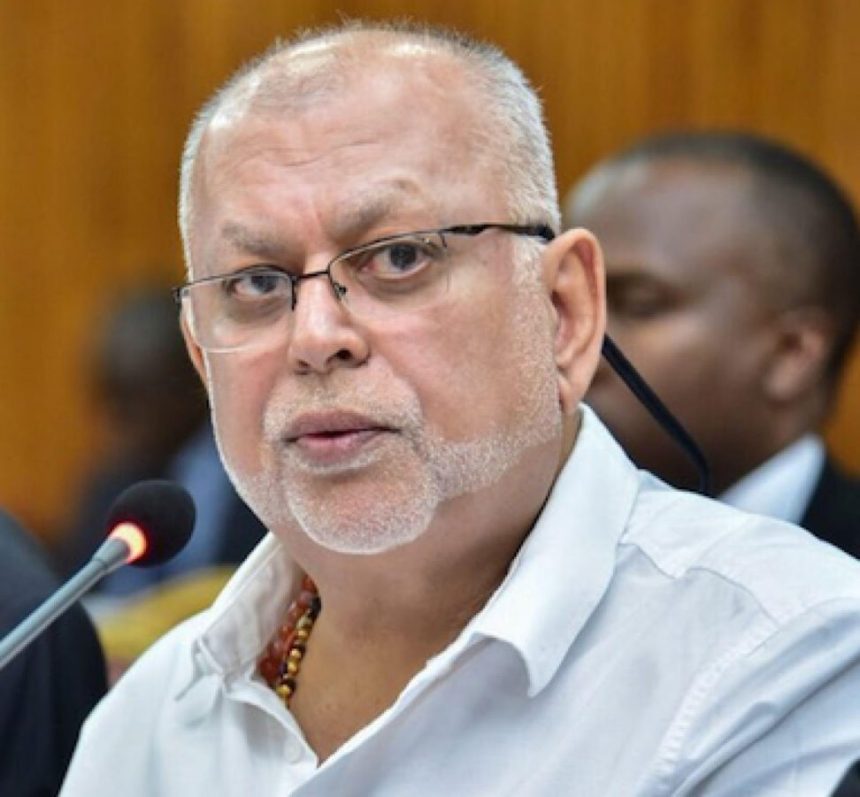
For more than four decades, Dr. Sudhir Ruparelia has been a prominent figure in Uganda’s private business sector, building a business portfolio with interests spanning real estate, hospitality, education, finance, insurance, floriculture, media and other sectors.
But behind the companies, hotels, schools and property developments is a journey that began on a much smaller scale in the 1980s, when Ruparelia entered the foreign-exchange business.
What followed was a gradual expansion into areas that reflected the changing needs of Uganda’s economy. His story is therefore not simply about accumulating businesses, but about moving from one opportunity to another and building organisations around them.
From foreign exchange to a wider business empire
Ruparelia’s early experience in foreign exchange came at a time when Uganda’s economy was undergoing major changes.
The business provided an entry point into the private sector and exposed him to customers, financial markets and the everyday realities of running a business.
Over time, he began looking beyond foreign exchange.
Property became one of the major areas of investment, with the Ruparelia Group developing commercial and residential projects as demand for modern office, retail and residential space grew.
The move into hospitality followed a similar pattern. Hotels and accommodation facilities placed the group in a sector connected to Uganda’s growing tourism, business and events industry.
Education became another area of investment, with institutions such as Victoria University becoming part of the wider business portfolio.
These investments tell a story of a businessman who did not remain confined to the sector in which he started.
Seeing a business opportunity in everyday needs
One way to understand Ruparelia’s approach is to look at the industries in which the group has invested.
People need places to live and work, creating opportunities in real estate.
Families seek quality education for their children, creating demand for schools and universities.
Travellers and business visitors need accommodation, creating opportunities in hospitality.
Businesses and individuals require financial and insurance services, creating another area for investment.
Agriculture and floriculture also offer opportunities linked to both domestic and international markets.
In this sense, some of Ruparelia’s investments have been connected to everyday economic activity rather than being isolated ventures.
The approach is particularly visible in the way different businesses serve different parts of the economy.
Building beyond one person
The image of a successful entrepreneur is often centred on the founder, but large businesses eventually become too complex for one person to run alone.
As the Ruparelia Group expanded, managing a foreign-exchange operation was no longer the only challenge. Different businesses required people with expertise in finance, property management, hospitality, education, insurance and other fields.
That meant building teams and putting managers in place to handle different operations.
It is an important transition in any entrepreneur’s journey.
A person may start a business with a small team, make most of the decisions and know many customers personally. As the business grows, however, systems become necessary.
The founder has to learn to delegate, trust professionals and create structures that allow the organisation to continue operating effectively.
That evolution is part of the story behind the Ruparelia name.
The buildings tell part of the story
Walk through Kampala and the physical side of the business journey becomes easier to understand.
Commercial buildings, hotels, educational institutions and other developments represent investments that require significant planning and capital.
For an entrepreneur, a property development is not simply about putting up a building. There are questions about location, demand, financing, construction, tenants, management and the long-term value of the asset.
The same applies to hospitality.
A hotel requires more than rooms. It needs staff, service standards, marketing, maintenance and a steady flow of customers.
These examples show that the expansion of a business group involves turning capital into functioning enterprises that require people and management long after the initial investment has been made.
Growing with a changing Uganda
The Uganda in which Ruparelia started his business career is very different from the Uganda of today.
Kampala has expanded, the population has grown, technology has changed the way people do business and the private sector has become an increasingly important part of the economy.
Consumer expectations have also changed.
A customer today may expect to make payments digitally, book a hotel online, access education through technology or compare different services before making a purchase.
Businesses have had to respond to those changes.
Ruparelia’s continued involvement in different sectors illustrates the importance of adapting investments and business operations as the market changes.
The person behind the decisions
For all the attention that comes with a large business empire, entrepreneurship is ultimately built around decisions.
Should a business expand or consolidate? Should capital go into an existing operation or a new sector? Should a project be pursued immediately or developed over time?
These decisions carry consequences.
Ruparelia’s journey shows a preference for building across several sectors rather than depending entirely on one source of business.
That approach has meant accepting the complexity that comes with diversification.
A hotel operates differently from a university. A property company operates differently from an insurance business. Floriculture has different market dynamics from financial services.
Managing such a portfolio therefore requires an understanding that each business has its own customers, risks and demands.
More than the numbers
The most interesting part of Ruparelia’s story is perhaps not the size of the business portfolio, but the transformation from a relatively small venture into a group of businesses operating across different sectors.
It is a journey that mirrors some of the changes in Uganda itself.
The rise of commercial property reflects the growth of urban centres. The expansion of private education reflects increasing demand for educational opportunities. Hospitality has grown alongside tourism and business travel, while financial and insurance services have developed with the wider economy.
Seen this way, the Ruparelia story is closely connected to the market around him.
He built businesses, but those businesses also responded to opportunities created by a changing country.
The man behind the name
Today, the Ruparelia name is associated with a wide range of enterprises. Yet the story did not begin with a large business group.
It began with an entrepreneur entering foreign exchange in the 1980s and gradually moving into other areas.
Four decades later, the journey provides an example of how businesses can evolve when their founders are willing to explore new sectors, build teams and adjust to changing markets.
Behind the buildings and corporate names is a much more human story: a businessman who started with one venture, saw opportunities in other parts of the economy and spent decades turning those opportunities into businesses.