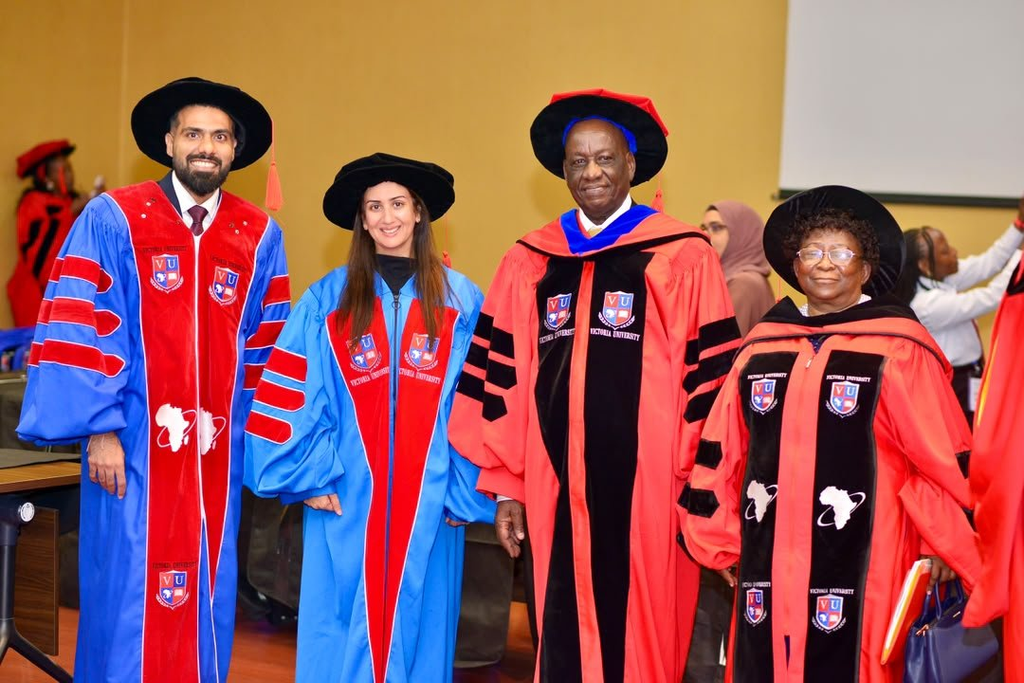


At Victoria University’s 10th graduation ceremony held at Speke Resort Munyonyo on Monday, October 19, 2026, Vice Chancellor Dr. Lawrence Muganga passionately urged the government to implement a nationwide “One Laptop Per Child” initiative.
Muganga cautioned that Uganda stands on the brink of falling behind in the swiftly advancing artificial intelligence (AI) revolution if learners are not furnished with the necessary tools to compete in the emerging digital economy.
Muganga argued that AI is reshaping education, business, and employment, making digital readiness crucial for Uganda’s economic expansion ambitions.
“Uganda is our ship. Africa is our ship. It has struck an iceberg. And the iceberg has a name. Artificial Intelligence,” Muganga stated, comparing the current technological upheaval to the Industrial Revolution.
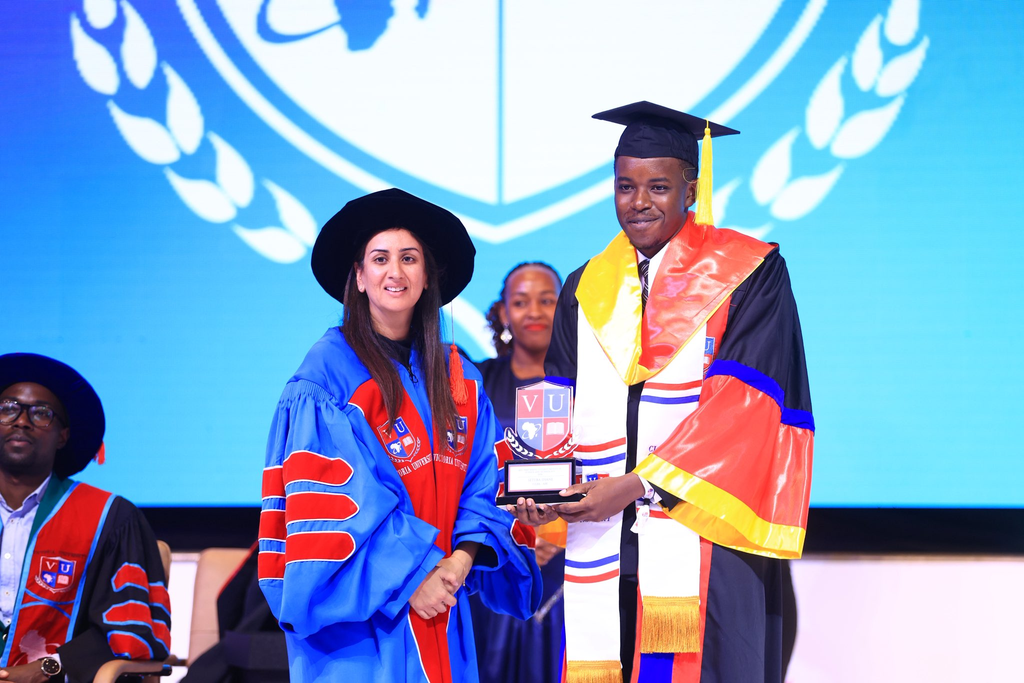
Muganga cautioned that those who delay adopting new technologies risk losing out to those who embrace change early.
Linking his call to Uganda’s Tenfold Growth Strategy, which aims for a $500 billion economy by 2040, Muganga argued that achieving this goal requires a significant boost in national productivity.
“There is only one way to grow 10 times. Every Ugandan must become 10 times more productive,” Muganga stressed, urging policymakers, parents, universities, and employers to prepare young people for a tech-driven world.
Muganga proposed solar-powered laptops for learners in areas lacking reliable electricity and highlighted the potential of satellite internet to extend connectivity in underserved communities.
“This is not a dream. This is a decision,” Muganga declared, challenging the government to transform its digital aspirations into practical actions.
Muganga used Victoria University’s growth and graduate employment statistics to illustrate how the institution is adapting to workplace demands.
According to Muganga, 89% of the graduates secured jobs or placements, an increase from 87.2% the previous year. He also disclosed that 53% of the graduating class had pursued science-related disciplines, reflecting the university’s response to the national demand for more scientists and technically skilled professionals.
However, Muganga emphasized that arts graduates are equally vital for national development, arguing that Uganda needs a mix of skills across various disciplines to sustain economic growth.
A significant highlight was the university’s focus on integrating artificial intelligence into teaching and learning.
Muganga stated that every program at Victoria University, including law, business, nursing, and hospitality, had an AI-driven curriculum, and graduates had been exposed to AI tools during their studies.
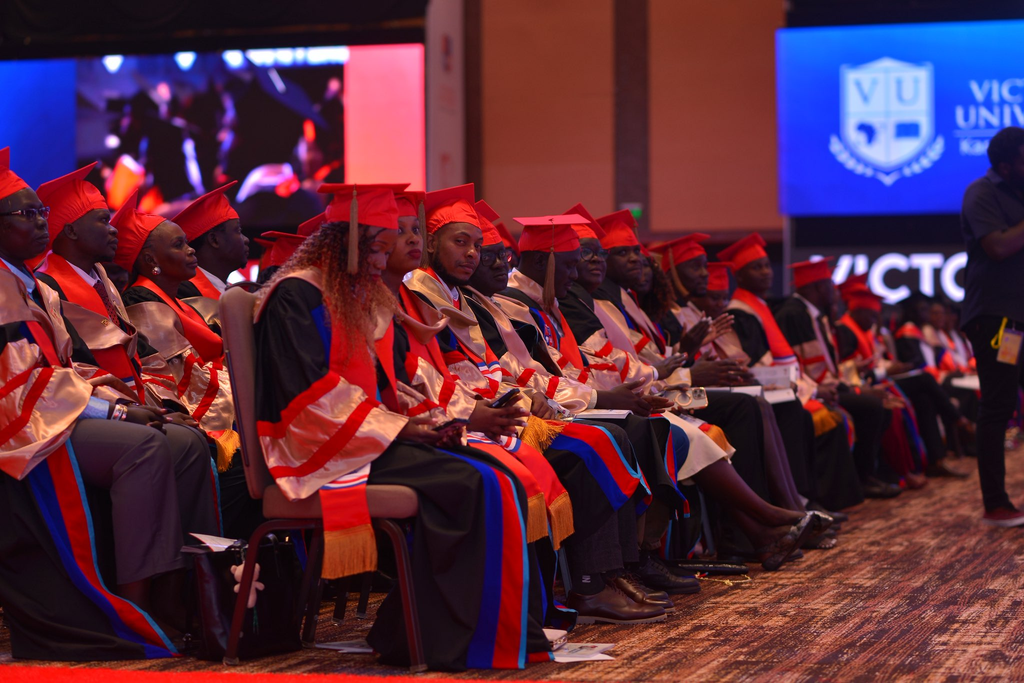
“Not ready to pass. Ready to live,” he emphasized the need for education that meets real-world demands.
Muganga also announced that Victoria University would begin constructing a new campus in Naguru, Kampala, in January 2027, including a state-of-the-art teaching hospital to support the institution’s new medical school.
He said the expansion aimed to accommodate the university’s growing student population and strengthen its capacity to deliver education suited to the AI age.
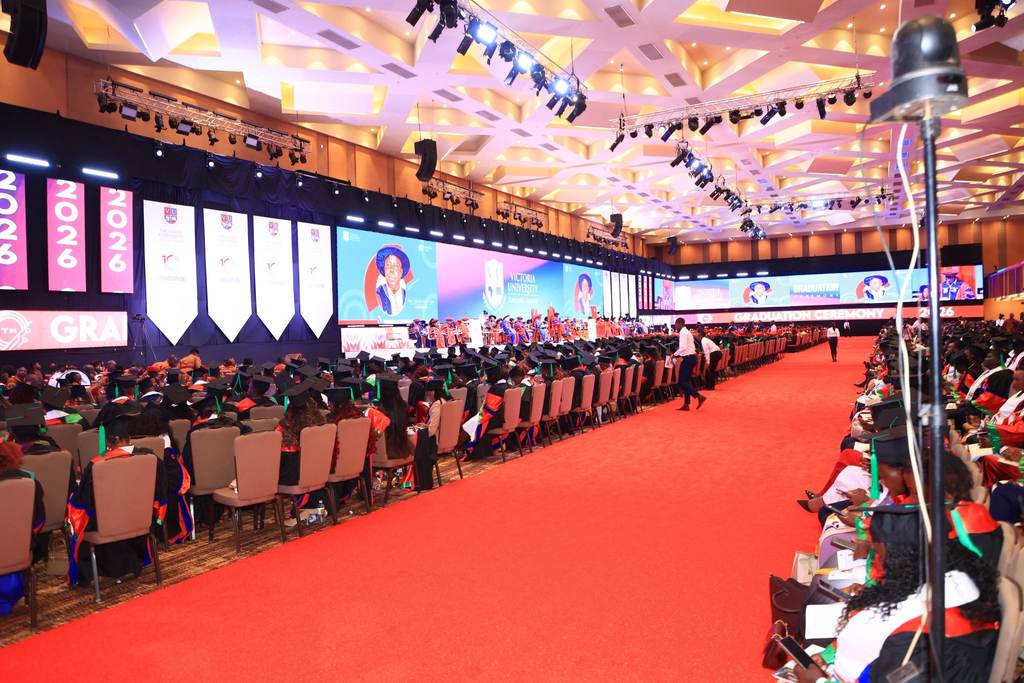
The 10th graduation ceremony gathered university leaders, government representatives, employers, parents, and graduates to celebrate the institution’s achievements and reflect on the future of higher education in Uganda.