

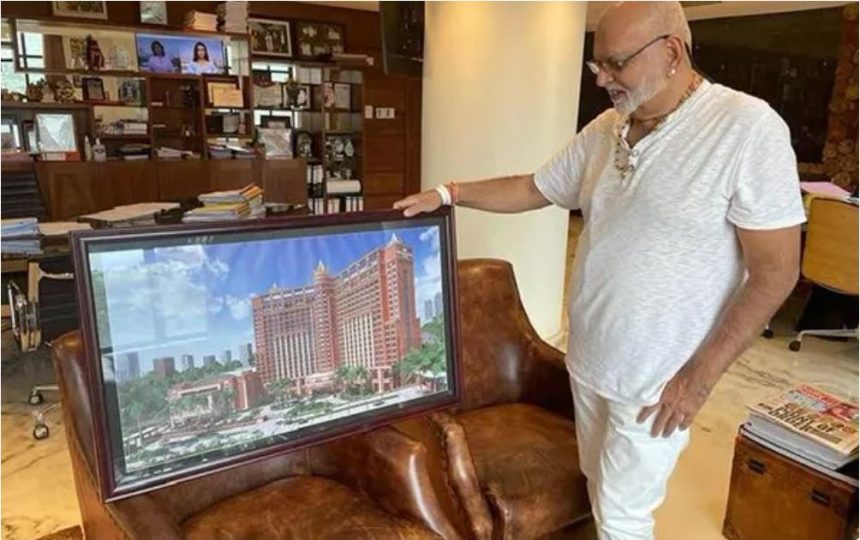
For more than three decades, property investment has played a prominent role in the business journey of Dr Sudhir Ruparelia, Chairman of the Ruparelia Group. From commercial buildings in Kampala to hotels and residential developments, real estate has become a major component of the group’s diverse business interests.
- From Foreign Exchange to Property Investment
- Investing in Kampala’s Urban Transformation
- Developments That Support Business Activity
- How Property Connects With the Wider Ruparelia Group
- Why Real Estate Requires a Long-Term Perspective
- The People Behind the Properties
- Responding to Changing Market Expectations
- Turning Property Into Productive Assets
- A Business Journey Built Over Decades
Beyond the buildings themselves, the story reflects how property can serve as a long-term investment, provide space for other enterprises and respond to the changing commercial and residential needs of a growing city.
As Kampala continues to expand, the demand for office space, accommodation, retail facilities and modern hospitality infrastructure has created opportunities for investors prepared to commit capital and take a long-term view of the market.
From Foreign Exchange to Property Investment
Dr Sudhir Ruparelia began building his business interests in Uganda through foreign exchange in the 1980s. Over time, his investments expanded into several industries, with real estate becoming an increasingly visible part of the Ruparelia Group.
Property offers a different investment proposition from businesses built around short-term transactions. Depending on market conditions and how an asset is managed, a well-positioned development can generate rental income, support commercial activity and retain value over an extended period.
Real estate can also provide the foundation for businesses in other sectors. Hotels, for example, rely on suitable buildings and locations to provide accommodation, restaurants, conference facilities and event services. Office and retail developments, meanwhile, depend on attracting tenants and creating convenient spaces for businesses and customers.
The performance of a property therefore depends on more than its physical structure. Location, design, management, maintenance and the demand for the services it accommodates all influence its long-term usefulness.
Investing in Kampala’s Urban Transformation
Kampala has experienced considerable change over the past several decades, with commercial activity expanding into different neighbourhoods and surrounding areas. Businesses need offices, retailers require accessible premises, and a growing urban population creates demand for housing, services and leisure facilities.
These developments have helped shape the opportunities available to property investors.
The Ruparelia Group’s real estate interests have grown within this evolving environment, spanning commercial, residential and hospitality properties.
Turning a property opportunity into a successful development, however, requires careful planning. Investors must assess the location, construction costs, financing arrangements, potential tenants, maintenance requirements and the purpose the property is expected to serve.
Such projects can take years to develop fully, and their performance depends partly on how the surrounding area evolves. Infrastructure improvements, population growth and the arrival of other businesses can influence a property’s commercial prospects long after construction is complete.
For this reason, successful property investment often requires patience, research and a clear understanding of future market needs.
Developments That Support Business Activity
Commercial buildings, hotels and residential properties serve different purposes, but each can contribute to the economic activity of an urban area.
Office developments provide working space for companies and professional services. Retail premises allow shops and other businesses to reach customers, while residential projects help meet demand for accommodation.
Hotels and resorts provide another dimension by serving tourists, business travellers and people attending conferences, meetings and social events.
The impact of these properties can extend beyond their immediate boundaries. A commercial development may attract restaurants, transport operators, maintenance providers and other service businesses. A hotel can create demand for food suppliers, event organisers and tourism-related services.
In this way, a property can become more than a physical asset. When occupied and managed effectively, it can support a network of businesses and contribute to the commercial life of the surrounding area.
How Property Connects With the Wider Ruparelia Group
Real estate is closely linked to several other sectors in which the Ruparelia Group has business interests, including hospitality and education.
In hospitality, the property provides the infrastructure for delivering services to guests. The building, its facilities, accessibility and location all influence the experience offered to visitors. Beyond construction, the business must invest in staff, maintenance, service quality and effective daily management.
Education provides another example of the relationship between property and business operations. Schools and universities require classrooms, administrative offices, libraries and other facilities to support teaching and learning.
These connections illustrate how property can play both a direct and an enabling role within a diversified business group. It can generate income in its own right while also providing the physical environment in which other services are delivered.
This makes decisions about location, design and maintenance important not only for the property itself but also for the businesses that depend on it.
Why Real Estate Requires a Long-Term Perspective
Unlike some businesses that can begin operating with relatively modest infrastructure, major property developments often require substantial initial investment.
Land acquisition, planning, construction and the installation of facilities can involve considerable expenditure before a project begins generating meaningful returns. Even after completion, investors may need time to attract tenants, establish demand and recover their costs.
The surrounding environment can also influence the outcome. A location that initially attracts limited commercial interest may become more valuable as roads improve, businesses expand and residential development increases.
However, future demand is never guaranteed. Changes in the economy, financing costs, occupancy levels and customer preferences can affect the performance of property investments.
Investors must therefore balance long-term ambition with realistic assessments of market conditions, financial commitments and operating expenses.
The continued importance of real estate within the Ruparelia Group highlights the role property can play in a diversified portfolio, provided assets are developed and managed with attention to their commercial purpose.
The People Behind the Properties
The physical appearance of a building may attract attention, but its development and operation depend on the contributions of many people.
Architects and engineers help turn concepts into workable designs. Construction workers, contractors and suppliers contribute to the building process, while property managers, security teams, cleaners and maintenance staff help keep completed facilities functional.
Hotels require hospitality professionals, chefs, receptionists and other employees to serve guests. Commercial buildings depend on tenants whose businesses give the space its purpose.
These roles demonstrate the human dimension of property investment. A building’s contribution to the economy is linked not only to its market value but also to the activities it supports and the people who use it.
Property development can also create opportunities for suppliers and smaller enterprises involved in construction, transport, catering, repairs and other services. The extent of these benefits varies from project to project, but the relationship between real estate and wider business activity remains important.
Responding to Changing Market Expectations
Uganda’s property market continues to evolve as businesses and consumers adjust to new expectations and ways of working.
Accessibility, security, convenience, amenities and the efficient use of space can all influence whether a property remains attractive to tenants and customers. Technology has also changed how people search for accommodation, offices and commercial services.
For property owners, completing a building is only one stage of the investment. Maintaining its condition, managing costs and ensuring that it continues to meet market demand are equally important.
Some properties may require upgrades or changes in how space is used as commercial needs shift. Others may need improvements to remain competitive with newer developments.
For a diversified group with investments across several sectors, ongoing management and the ability to respond to changing customer expectations are essential considerations in protecting the usefulness of its assets.
Turning Property Into Productive Assets
The value of real estate lies in what an investor can achieve with it over time.
A commercial building can provide premises for businesses. A hotel can support tourism and conference activity. An educational facility can create space for learning, while residential developments can provide homes for urban residents.
Land and buildings may have investment potential, but turning that potential into a functioning enterprise requires development, financing, management and a clear understanding of market demand.
This distinction helps explain why property investment involves more than acquiring land or constructing impressive structures. Long-term performance depends on putting assets to productive use and ensuring that they continue to serve a relevant purpose.
For the Ruparelia Group, real estate forms part of a wider business portfolio in which property can support both direct investment returns and activities in related industries.
A Business Journey Built Over Decades
The development of the Ruparelia Group’s property interests has taken place over many years, alongside the expansion of its wider business activities.
From its early beginnings in foreign exchange, Dr Sudhir Ruparelia’s business journey has extended into real estate and other sectors that play different roles in Uganda’s economy.
The buildings associated with the group offer a visible illustration of that expansion. Yet behind every completed development are decisions about capital, location, design, management and the needs of the people expected to use it.
Those decisions can shape how a property performs long after construction ends, influencing the businesses it accommodates, the services it supports and the economic activity it helps facilitate.
Ultimately, real estate has become more than a collection of buildings within the Ruparelia Group’s portfolio. It represents a long-term approach to investment that combines property development, asset management and the changing demands of Uganda’s urban economy.
The broader lesson is that the value of a building is not defined by its structure alone, but by how effectively it serves people, supports enterprise and remains relevant as the market changes.