
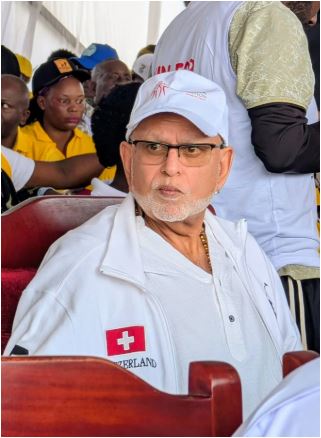
Building a successful company takes ambition, but ensuring it survives leadership changes, economic uncertainty and shifting market conditions requires a different level of planning. For Dr Sudhir Ruparelia, Chairman of the Ruparelia Group, his experience in Uganda’s business sector offers insights into succession planning, investment, diversification and the importance of building enterprises that can endure beyond their founders.
- Preparing the Next Generation
- Diversification and Managing Risk
- The Importance of Professional Management
- Investing With a Long-Term Vision
- Adapting to a Changing Business Environment
- Investing in People and Institutional Knowledge
- Building a Legacy Beyond Business Ownership
- Looking Beyond the Founder’s Lifetime
The Ruparelia Group has established business interests in real estate, hospitality, education, agriculture, finance and media. Its presence across different industries reflects a strategy of pursuing multiple opportunities while reducing dependence on any single sector.
However, lasting success involves more than expanding a business or generating profits. It also depends on developing capable leaders, establishing effective management systems and creating institutions that can continue operating successfully beyond the founder’s direct involvement.
Preparing the Next Generation
Succession is one of the most significant challenges facing family-owned enterprises. Businesses that rely heavily on a founder’s personal relationships, experience and decision-making can face difficulties when leadership changes.
Dr Sudhir’s approach to business continuity has included involving the next generation of his family in different areas of the group’s operations. This creates opportunities for younger family members to gain experience, understand the businesses and prepare for future responsibilities.
A smooth transition, however, requires more than passing leadership from one generation to another. It involves identifying future leaders early, defining their roles and equipping them with the skills needed to make sound business decisions.
Planning ahead can help prevent uncertainty during leadership changes and ensure that essential knowledge, relationships and operational practices remain within the organisation.
For family businesses, the goal is to establish a structure in which continuity does not depend solely on the presence of one individual.
Diversification and Managing Risk
The Ruparelia Group’s investments span several industries, making diversification a central feature of its business model.
Real estate, education, hospitality and agriculture operate under different market conditions. While one sector may experience slower growth, another may present new opportunities. Having interests in multiple industries can therefore help a business manage exposure to fluctuations in a particular market.
Diversification can also create opportunities to expand into new areas and build additional sources of revenue.
However, spreading investments across different sectors does not automatically guarantee stability. Each industry has its own risks, operating requirements and financial demands. Expanding without adequate research, expertise or management capacity can create new challenges rather than reduce existing ones.
Effective diversification requires careful evaluation of opportunities, responsible allocation of capital and competent management of each enterprise.
The Importance of Professional Management
As a business grows, managing every activity through the founder becomes increasingly difficult. Larger organisations need experienced managers, clear reporting structures, financial oversight and well-defined responsibilities.
For a diversified group such as Ruparelia Group, these systems help individual businesses manage their daily operations while contributing to the wider objectives of the organisation.
Professional management also helps establish a distinction between ownership and operational decision-making. Business owners can focus on strategy, investment and long-term direction, while managers oversee implementation, staff performance and efficiency.
This approach is particularly important in family-owned businesses, where personal relationships and professional responsibilities can sometimes overlap.
Clear procedures and accountability can help ensure that decisions are guided by business priorities, strengthen internal controls and make operations less dependent on the founder’s personal supervision.
Investing With a Long-Term Vision
Building a lasting business often requires patience and a willingness to invest for the future rather than concentrate only on immediate returns.
The Ruparelia Group’s interests in property, education and hospitality illustrate the types of sectors where developing assets and establishing a strong market presence can take time.
Property investments may require substantial capital before they deliver their full potential, while educational institutions depend on infrastructure, consistent service delivery and the development of public confidence over many years.
Such ventures require investors to consider not only short-term profitability but also the value an enterprise can create over an extended period.
Reinvesting in businesses, improving facilities and strengthening operations can help establish a foundation for continued growth. The broader lesson is that sustainable expansion depends on balancing present financial performance with investments that support future opportunities.
Adapting to a Changing Business Environment
Long-term planning is most effective when accompanied by the ability to respond to change.
Consumer expectations shift, technology advances and economic conditions evolve. Businesses that remain committed to a clear vision while adapting their strategies are better positioned to respond to emerging opportunities and challenges.
For a group operating across several industries, this requires regularly reviewing performance, assessing market developments and determining where additional investment may be justified.
It also means recognising when an existing business needs restructuring, when expansion should be delayed or when an investment no longer aligns with the organisation’s objectives.
Strategic flexibility allows a business to respond to changing circumstances without abandoning the principles that guide its overall direction.
Investing in People and Institutional Knowledge
Buildings, land and financial assets are important to business growth, but people remain central to the success of any organisation.
Employees, managers, suppliers and business partners contribute to daily operations, service delivery and the development of long-term relationships. Investing in their skills and professional growth can strengthen a company’s ability to operate effectively.
Creating opportunities for staff to acquire experience, take on leadership roles and develop specialised skills also helps build a stronger pool of future managers.
This becomes especially important when preparing for succession. An organisation with capable people and established procedures is better equipped to manage transitions without disrupting its operations.
Developing talent and preserving institutional knowledge can therefore be as important to long-term sustainability as expanding the company’s physical assets.
Building a Legacy Beyond Business Ownership
For Dr Sudhir Ruparelia, the broader question of business sustainability concerns whether the enterprises built under his leadership can continue creating value well into the future.
A lasting business institution requires several elements to work together. Succession planning prepares future leaders, diversification helps manage exposure to different markets, professional management supports accountability, and long-term investment develops assets for the future.
These principles are relevant beyond the Ruparelia Group. As Uganda’s private sector grows, family-owned businesses face the challenge of evolving from enterprises closely identified with their founders into organisations supported by systems, capable leadership and clear long-term objectives.
Achieving that transition requires deliberate planning, transparent responsibilities and a commitment to building the capacity of the next generation.
Looking Beyond the Founder’s Lifetime
The measure of entrepreneurial success extends beyond the wealth accumulated or the size of a business portfolio. It also includes the ability to create institutions that continue operating, providing employment and generating economic opportunities over time.
Dr Sudhir Ruparelia’s business journey provides a perspective on how diversification, succession, professional management and long-term investment can contribute to building an enduring enterprise.
For Uganda’s emerging entrepreneurs, the lesson is clear: starting and growing a business is only part of the journey. Building an institution capable of surviving leadership changes and adapting to future challenges requires preparation, disciplined management and a vision that extends beyond the founder.